Showing posts with label business. Show all posts

Friday, October 10, 2014

Improve your speaking and presentation skills with Toastmasters


For further information about Toastmasters at VIU,   contact Blessing at:   tsolurodavid@yahoo.com
If Thursdays don't work for you,  there are numerous other Toastmasters clubs in Nanaimo that meet on different days, times and places.  

 You can find out more by visiting the Toastmasters of Nanaimo calendar     here:   


Friday, June 20, 2014

Government of Canada's Language Web Portal plus some business writing resources

I came across this website today quite by accident, but it looks very interesting and worthy of exploration.

Language Portal of Canada


Also,  for business students,   the Business Writer's Free Library has a bountiful supply of resources.

Business Writer's Free Library

Finally,   this business writing blog is definitely worth subscribing to.

Business Writing

Tuesday, May 27, 2014

Rules for Better Cover Letters

A couple of interesting articles I came across on the Net.   Nothing new to MBA Internship students.

7 New Rules For Writing The Perfect Cover Letter

Monday, May 5, 2014

Writing Numbers


Numbers are extremely common in academic writing,  especially business writing.    Therefore,  it is important to abide by correct conventions in using them.    As it is,  there are different rules depending on whether your discipline follows APA,  MLA,  Harvard Referencing, or other formats.    For the sake of simplicity,   this blog post will cover the main rules according to APA.

According to APA,  write the numbers as words for one through nine.   For above nine, write out the number.

Examples:

I ate one pickle    She ate four pickles.  He ate 10 pickles.  They ate 99 pickles.

However,  if a sentence begins with a number,  write out the number.

Ninety-nine pickles fell onto the floor.

For numbers in technical contexts  (i.e. dates, times,  addresses,  prices, statistics),  write out the numbers.

The jar of pickles cost $4.99.     He bought it on May 2, 2014.


Speaking numbers and listening to numbers are another matter for another blog post.


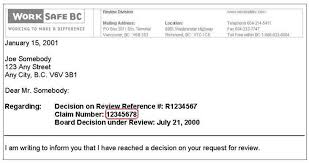
Look at the use of numbers in this letter:


Friday, February 14, 2014

Better Business Writing


  • What makes for good business writing?  


  • Can you think of the top ten criteria? 


  • What should effective business writing not be?  


  • How does this compare with typical business writing in your own country?


  • How does your business writing stack up?


Think of these questions as you engage in and seek to improve your own business writing.

First,  what types of business writing do you do?    What kind of feedback have you gotten about it?

You may not be able to fix everything about your business writing,  but you can make a start by focusing on a few significant trouble spots.      What are three specific things you can improve about your business writing?


A recent Forbes article noted 8 keys to better business writing.    While clearly important for business contexts, they are applicable to all writing.


  1. Know your purpose.
  2. Know and understand your reader.   (What do they need and want?  What do they like?)
  3. Write a quick first draft.  (Don't over-think things.)
  4. Revise and edit.  (Always be sure to check  before clicking the 'send' button.)
  5. Be extremely clear and direct.
  6. Avoid redundancy (of words and ideas).
  7. Avoid jargon.
  8. Use the appropriate tone. (This point is related to point 2;  be neither overly formal, no excessively informal).
To these,  I would add several:

9.   Use non-discriminatory language (this link explains it well -- scroll down)


Here is a  wonderful example of how writing can be improved.

Remember,   your writing is an immediate and enduring reflection of who you are.   


Useful websites:


Good Business Writing Style

8 Keys to Better Business Writing

Business Writing

10 Business Writing Tips Direct from the Experts


Tuesday, January 7, 2014

Effective cover letters and résumés


For most people seeking professional employment,   a cover letter and résumé is the first formal presentation of themselves that is made.    It can make or break a career path.    You are marketing yourself and this is one of the marketing tools you employ.

Some key principles in preparing cover letters and résumés are:
  • there should be absolutely no spelling mistakes
  • there should be no glaring grammar mistakes
  • the right words should be used -- clear and powerful language makes the best impression; remember you are marketing yourself and trying to persuade an employer to hire you
  • it must be concise -- there should not be any unnecessary words or information
  • the presentation should be crisp and uncluttered -- it should be both easy and enticing to read
  • it should help you stand out from the crowd
  • it must be honest (be very careful about embellishment)
  • it should be written for a specific reader -- your potential employer
  • it should demonstrate a fit between you and the job/company you want to work in

Some useful websites are:

Sample cover letters (from University of Wharton MBA School)

Writing Effective Cover Letters and Resumes (U of Laurier -- contains a video and great resources)

Efffective Cover Letters and Resumes (a useful handout)

Government of Canada Tips on Writing a Resume


Remember that these two documents are what help you get your foot in the door,  a.k.a. get an interview.